by Lyf Gildersleeve
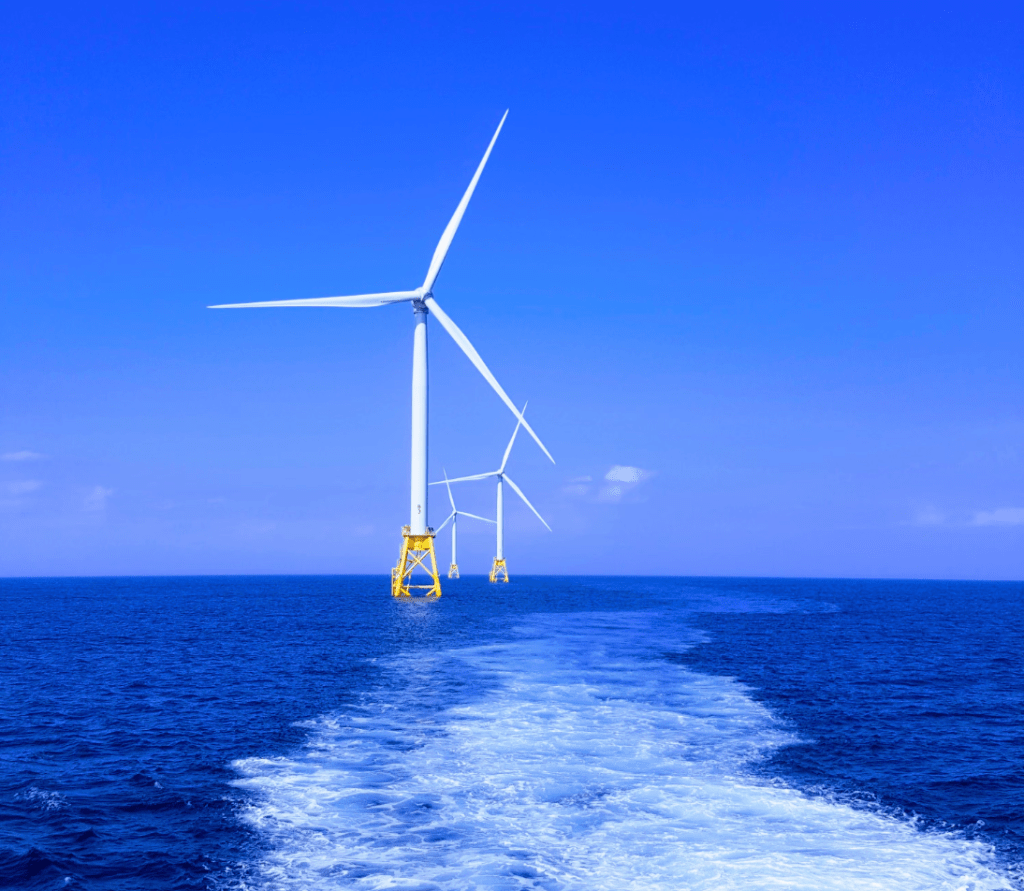
With Sustainable Fishmonger, my goal is to consider, discuss, and address concerns related to fisheries and the seafood industry — things like oceans, dams, fishery management, and climate change. Today, let’s consider offshore wind energy.
Two years ago, President Biden set a national goal of deploying 30 gigawatts of offshore wind electricity generation by 2030. Likewise, California alone has set an ambitious goal to power all electricity sold in California for public and private use by 2045 with renewable and zero-carbon resources — those such as solar and wind energy that do not emit climate-altering greenhouse gasses.
While I applaud these audacious goals to address climate change, it’s important to evaluate the environmental, economic, and socioeconomic costs.
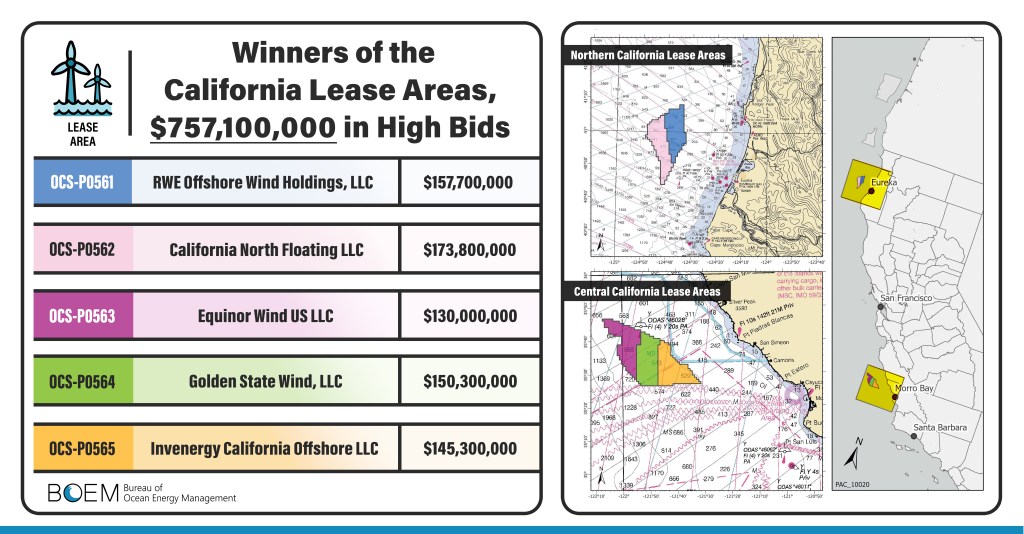
Our southern neighbor California is pressing forward at an increasing rate to provide offshore leases, seemingly without cautious attention to the immense impacts that offshore wind can have on fisheries and the environment. Oregon legislators, meanwhile, have called for a pause on offshore wind. In response to a Bureau of Ocean Energy Management (BOEM) proposal for two offshore wind farms, Oregon legislators and Tribes asked for an extended public input period and a more robust environmental impact analysis.
On the East Coast, President Biden continues to pursue offshore wind development, including a recent announcement of the largest offshore wind project in the nation, 23 miles offshore Virginia Beach. It’s important to remember that ocean conditions on the West Coast are rougher and have a deeper seafloor. This requires different technologies, including floating wind turbines anchored to the seafloor, with electrical transmission lines to the coast. These lines emit electromagnetic frequencies that have the potential to interfere with endangered fish and marine mammals’ communication and livelihood. These are important cons to consider when the pros are the hope that the floating wind turbines generate their expected electricity.
It’s clear that we need to find ways to produce power without creating more dams on the rivers or risky nuclear power plants. But the current proposition to create offshore wind plants on the Pacific Coast has undeniable challenges and potentially harmful impacts on fisheries, ocean currents, and birdlife.
“These could be the biggest threat to our fisheries that we have ever seen,” said Phil Anderson, at-large member (and past chairman of) the Pacific Fishery Management Council. Many of the proposed offshore wind sites are in areas actively used for fishing with sensitive seafloor fauna, as well as active bird migration paths.
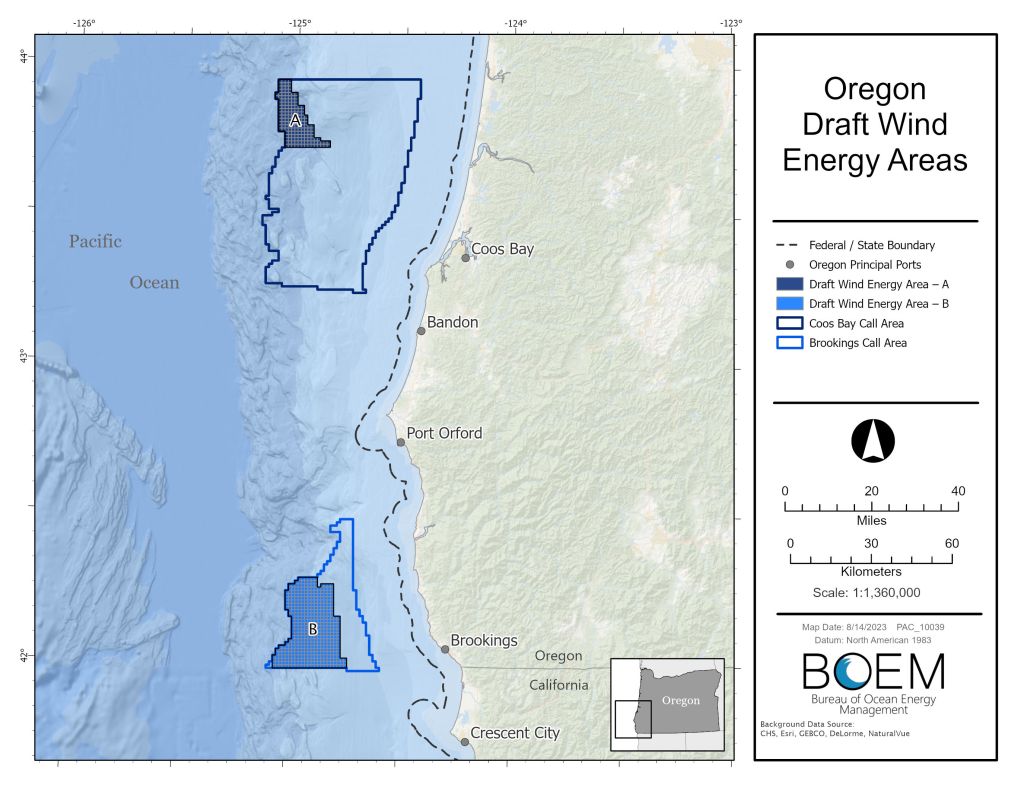
Several recent articles provide a good overview of BOEM’s proposal, and moreover the feedback that considers the potential setbacks of such a large proposal.
- Surfrider Foundation: This writeup from Surfrider (through whom Flying Fish is a certified Ocean-Friendly Restaurant) provides an overview of the letter from Oregon Governor Tina Kotek, Senators Ron Wyden and Jeff Merkley, and Congresswomen Val Hoyle and Suzanne Bonamici to BOEM recognizing the frictions created from the pace of the proposal.
- Oregon Conservation Coalition: This is a copy of the letter co-signed by dozens of leaders including those from several Audubon Society chapters, Native Fish Society, Surfrider Portland, Oregon Wild, and Friends of Haystack Rock, expresses to BOEM the concerns AND recommendations from a science-based coalition of stakeholders.
- Philadelphia Inquirer: To further highlight the challenges with offshore wind, a New Jersey company canceled their plans for a 2.2 gigawatt development due to unfavorable financial opportunities and a flood of controversy from coastal residents.
In addition to physical effects on ocean wildlife and fishing industry blockages, another concern regarding floating wind turbines pertains to upwelling and ocean currents. The Pacific Ocean is one of the most biologically diverse ecosystems due largely to the prolific nutrition created by ocean upwellings, for example the phytoplankton that feed the crustaceans and small fish that feed larger fish and mammals.
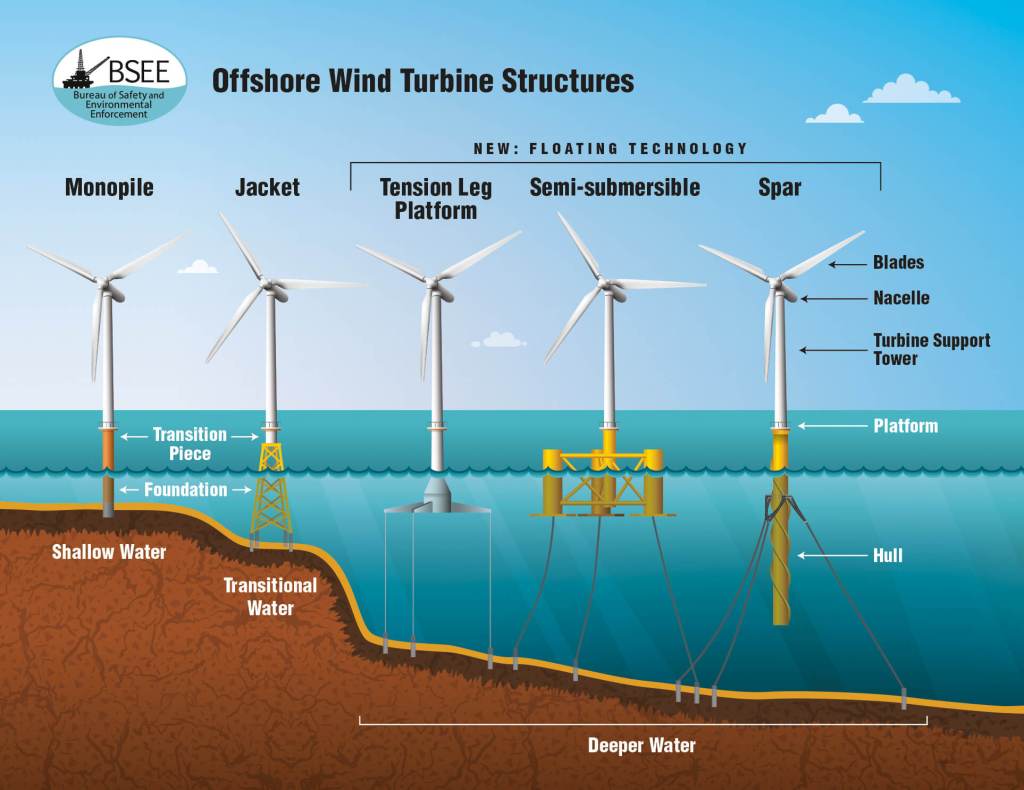
Massive floating turbines will require massive anchor cables which then attach to the seafloor with massive concrete slabs. These cables, thousands of feet long, will inherently affect ocean currents and natural upwelling that currently happens without us doing anything. This upwelling provides the food that travels up the coastal food chain including all sea organisms, sea birds, and wildlife.
If we continue to alter the ocean conditions, we stand at risk of altering how the ocean works. We don’t yet know how it will change, and for that reason, we shouldn’t rush into such an immense undertaking. Instead, we need time to analyze and truly understand the costs and benefits of floating offshore wind facilities.
 Sustainable Fishmonger
Leave a comment